













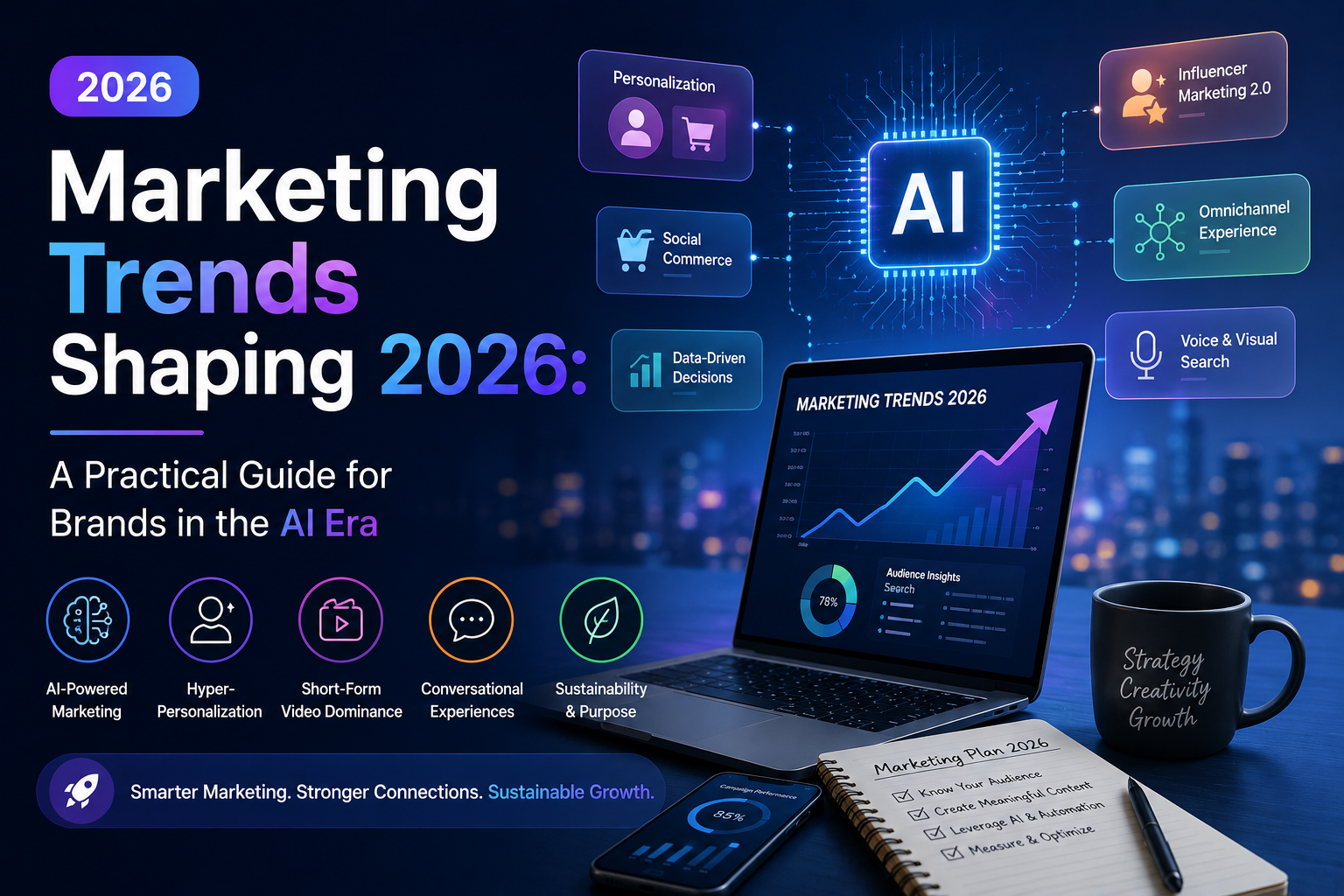
Digital marketing is no longer driven by channels alone — it is driven by data intelligence, AI-powered experiences, and measurable outcomes. As we move into 2026, businesses that rely on outdated SEO, generic content, or fragmented campaigns will struggle to stay visible and competitive.
At SonyDig, we closely track global digital marketing shifts and translate them into real-world strategies that deliver growth. This guide explains the most important digital marketing trends for 2026 and how brands can apply them safely, ethically, and effectively.
1. SEO Is Evolving Into Answer Engine Optimization (AEO)
Search behavior has fundamentally changed. Users now ask complete questions, and AI-powered search engines often provide direct answers instead of blue links.
This has given rise to Answer Engine Optimization (AEO) — content structured to be easily understood and cited by AI systems.
What works in 2026:
- Clear question-and-answer formatting
- Concise explanations within 40–60 words
- Proper heading structure (H2, H3)
- Schema markup (FAQ & Article)
- Authority-backed content with real expertise
SonyDig Insight:
We optimize content not just for ranking, but for being referenced inside AI-generated search answers, ensuring long-term visibility even as click behavior changes.
2. AI Is Now a Marketing Infrastructure, Not Just a Tool
AI is no longer limited to content generation. It has become the operating layer of modern marketing, supporting:
- Predictive campaign performance
- Automated customer journeys
- Personalized content delivery
- Smarter media buying decisions
However, over-reliance on automation without human strategy can damage brand trust.
Best Practice:
Use AI to support decisions, not replace strategic thinking.
SonyDig Approach:
We combine AI insights with human creativity to ensure accuracy, brand consistency, and ethical marketing execution.
3. First-Party Data Is the Foundation of Future Marketing
With increasing privacy regulations and the decline of third-party cookies, first-party data is now a brand’s most valuable digital asset.
Smart data strategies include:
- Consent-based data collection
- CRM and CDP integration
- Behavior-driven personalization
- Secure data handling aligned with privacy laws
For businesses serving global markets, adhering to country-specific and international data protection laws is a key requirement for responsible digital marketing
SonyDig Recommendation:
Build transparent data systems that prioritize user trust while enabling meaningful personalization.
4. Video Is No Longer Just Engagement — It Drives Revenue
Video content has evolved from awareness-focused storytelling to direct conversion channels.
In 2026, high-performing video strategies focus on:
- Short-form and vertical video formats
- Product-led storytelling
- Shoppable and interactive video experiences
- Clear calls-to-action
SonyDig Implementation Tip:
Every video should have a defined business goal — not just views, but leads, sign-ups, or sales.
5. Retail Media & Performance Platforms Are Gaining Importance
Retail media platforms and performance-based ad ecosystems allow brands to reach users closer to purchase intent.
Benefits include:
- High-quality audience data
- Full-funnel measurement
- Better attribution clarity
This trend highlights the shift from impression-based advertising to outcome-based marketing.
6. Community and Creator-Led Marketing Builds Long-Term Trust
Influencer marketing is maturing into creator partnerships and brand communities.
Successful brands now:
- Collaborate with creators long-term
- Co-create content instead of one-off promotions
- Build communities around shared values
Trust, authenticity, and relevance matter more than follower counts.
SonyDig Strategy:
We focus on creator alignment and community relevance rather than superficial reach metrics.
7. Marketing Measurement Is Being Redefined
Traditional attribution models are losing accuracy due to privacy changes and AI-driven search behavior.
Modern measurement strategies focus on:
- Business outcomes, not vanity metrics
- Multi-touch attribution models
- Cross-channel performance analysis
SonyDig View:
Marketing success must be measured by impact on growth, not just clicks or impressions.
What These Trends Mean for Global Brands
For businesses operating across international and diverse markets, these trends highlight the need for:
- Multilingual and voice-search-ready content strategies
- Privacy-compliant and region-aware data practices
- AI-assisted marketing with strong human oversight
- Integrated SEO, AEO, content, and performance marketing frameworks
Brands that adapt early will achieve greater visibility, build long-term trust, and scale sustainably across global markets.
How SonyDig Helps Brands Stay Future-Ready
At SonyDig, we help organizations move beyond trends and implement future-proof digital strategies, including:
- SEO & AEO optimization
- AI-powered content and performance marketing
- Data-driven digital transformation
- Website and platform optimization
- Government and enterprise digital solutions
Our approach is built on experience, compliance, performance, and trust.
Final Thoughts
The future of digital marketing is not about chasing algorithms — it’s about building authority, relevance, and measurable value. Brands that align technology with purpose and strategy will lead in 2026 and beyond.
If you’re planning to upgrade your digital marketing strategy, now is the time to act.